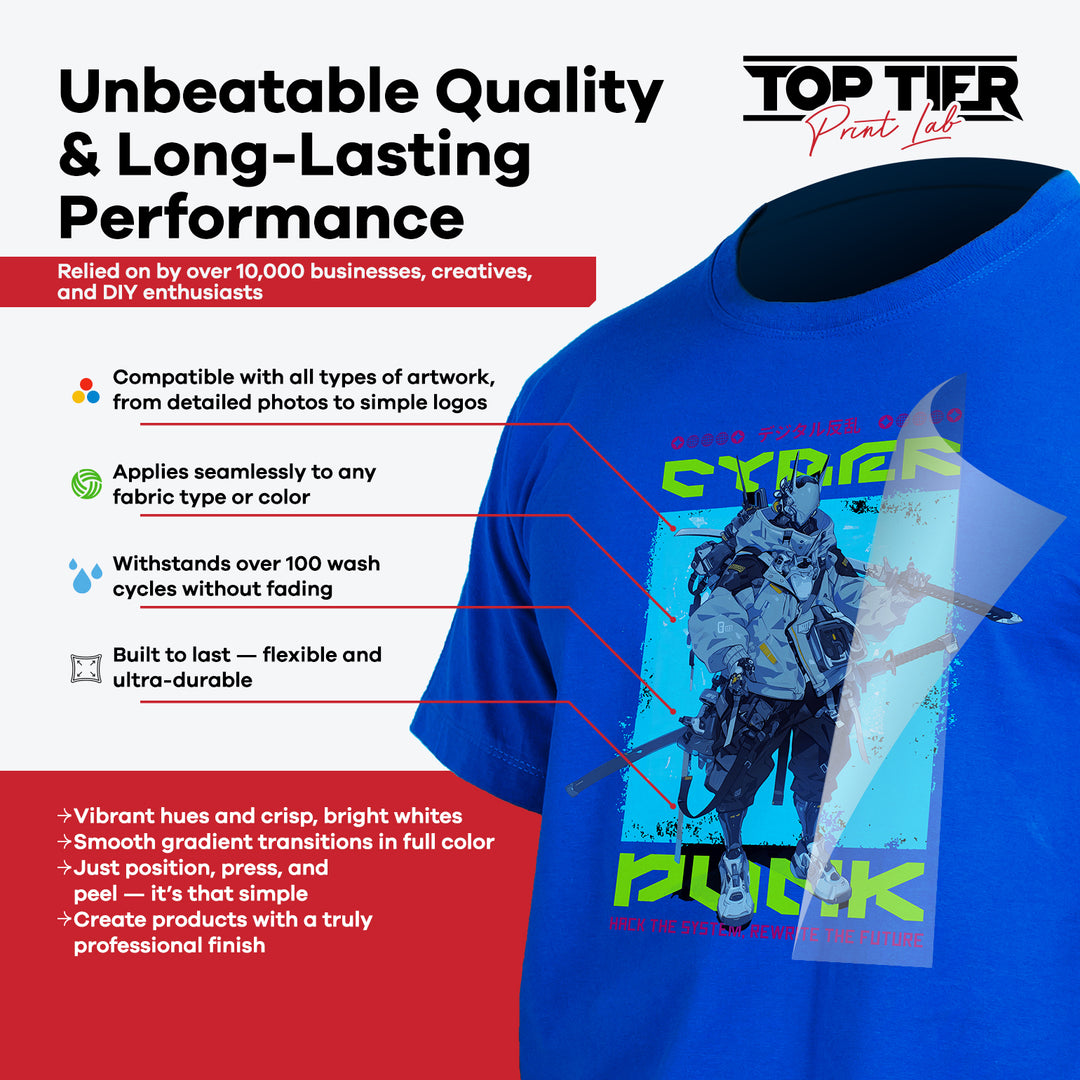
In the dynamic world of digital printing, optimizing workflow efficiency is paramount for achieving both high-quality results and customer satisfaction. Direct-to-Film (DTF) printing, known for its versatility and vibrant outputs, presents unique challenges and opportunities when transferring designs by size. Understanding how to efficiently manage DTF transfers by size can significantly enhance production processes, reduce waste, and improve turnaround times. This article delves into effective strategies to streamline your DTF printing workflow, emphasizing techniques tailored for size-specific transfers.
Understanding the Basics of DTF Printing
DTF printing involves transferring designs onto various substrates using a special film, which allows for intricate and colorful designs without compromising on quality. The process typically includes:
- Printing the design onto a transfer film.
- Applying a powder adhesive to the printed film.
- Heat pressing the film onto the desired substrate.
Each step in this process can be optimized based on the size of the transfer, which in turn affects the overall efficiency and quality of the final product.
Optimizing DTF Transfers by Size
Choosing the Right Materials
The choice of materials, including the type of film and adhesive powder, plays a crucial role in the quality of size-specific transfers. Smaller designs may require different film characteristics compared to larger ones to ensure sharpness and durability. Discover expert strategies here for selecting the best materials for varying transfer sizes.
Adjusting Printing Parameters
Printing parameters such as ink density, heat settings, and press duration should be adjusted in accordance with the size of the transfer. Larger transfers may require more heat and longer press times to ensure even application, whereas smaller designs might benefit from reduced settings to prevent inadvertent bleeding or distortion. Learn about our tailored solutions to fine-tune these parameters effectively.
Enhancing Workflow Efficiency
Batch Processing Techniques
Batch processing can significantly enhance workflow efficiency. By grouping transfers of similar sizes, it is possible to standardize settings across batches, minimizing downtime between jobs and ensuring consistency. Additionally, this approach reduces setup time and material waste. Explore advanced guides and tips on batch processing for DTF transfers.
Implementing Quality Control Measures
Quality control is essential in maintaining high standards across all transfer sizes. Regularly inspecting transfers for issues such as misalignment or color discrepancies can help identify and rectify problems early. Automated inspection systems can further streamline this process, providing real-time feedback and reducing manual errors. Find out more about this approach to enhance your quality assurance practices.
Conclusion
Efficient DTF transfer by size requires a keen understanding of the interplay between materials, printing parameters, and workflow strategies. By focusing on these key areas, digital printing professionals can achieve optimal results, ensuring that each transfer meets the desired quality standards while minimizing production time and costs. Exploring the appropriate resources and guides can provide valuable insights into tailoring these processes to meet specific size requirements, ultimately leading to a more streamlined and effective workflow.